Aerospace CNC Milling: Precision Manufacturing for Modern Aviation
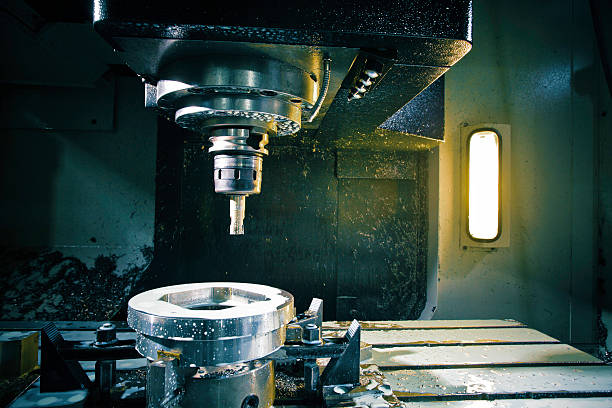
Aerospace CNC milling is a highly specialized manufacturing process used to produce critical components for aircraft, spacecraft, and defense systems. CNC, or Computer Numerical Control, milling uses computer-controlled machines to remove material from a solid workpiece with exceptional accuracy. In the aerospace industry, where safety, reliability, and performance are essential, aerospace cnc milling Ohio plays a major role in producing complex parts with tight dimensional tolerances.
One of the key advantages of aerospace CNC milling is its ability to manufacture components with complex geometries. Modern aircraft require parts such as engine components, structural brackets, housings, landing-gear components, and wing fittings that may contain intricate curves, pockets, holes, and thin walls. Multi-axis CNC milling machines can approach a workpiece from different directions, allowing manufacturers to produce complicated shapes while reducing the need for multiple setups.Material selection is another important consideration.
Aerospace components are commonly manufactured from materials such as aluminum alloys, titanium, stainless steel, and high-performance nickel-based alloys. These materials offer useful combinations of strength, low weight, corrosion resistance, and heat resistance. However, many aerospace materials can be challenging to machine. Titanium, for example, generates significant heat during cutting and requires carefully selected cutting tools, speeds, feeds, and cooling strategies.Accuracy and repeatability are particularly important in aerospace manufacturing.
Even small dimensional variations can affect how components fit together or perform under demanding operating conditions. CNC milling allows manufacturers to program precise tool movements and repeat the same machining operations consistently. Advanced inspection equipment, including coordinate measuring machines (CMMs), can then be used to verify that finished parts meet engineering specifications.Computer-aided manufacturing (CAM) software is an essential part of the process. Engineers can convert digital component designs into detailed machining instructions, including toolpaths, cutting strategies, and machining parameters.
Simulation software can also identify potential collisions and manufacturing problems before production begins. This reduces material waste, machine downtime, and the risk of costly errors.Aerospace CNC milling also supports efficient production. Although aerospace components often require considerable machining time, automated CNC systems can improve productivity and reduce manual intervention. Manufacturers can use standardized tooling, automated tool changers, and advanced machining strategies to produce components efficiently while maintaining quality.Quality control remains a fundamental part of aerospace CNC milling.
Manufacturers must maintain accurate records, monitor machining processes, inspect finished components, and ensure that materials and processes meet applicable aerospace standards and customer requirements. Traceability is particularly important because aerospace parts may remain in service for many years.As aerospace technology advances, CNC milling is becoming increasingly sophisticated. High-speed machining, five-axis equipment, improved cutting tools, automation, and digital manufacturing technologies are enabling manufacturers to produce lighter and more complex components. Together, these developments make aerospace CNC milling an important technology for building safer, more efficient, and increasingly advanced aircraft and spacecraft.
